
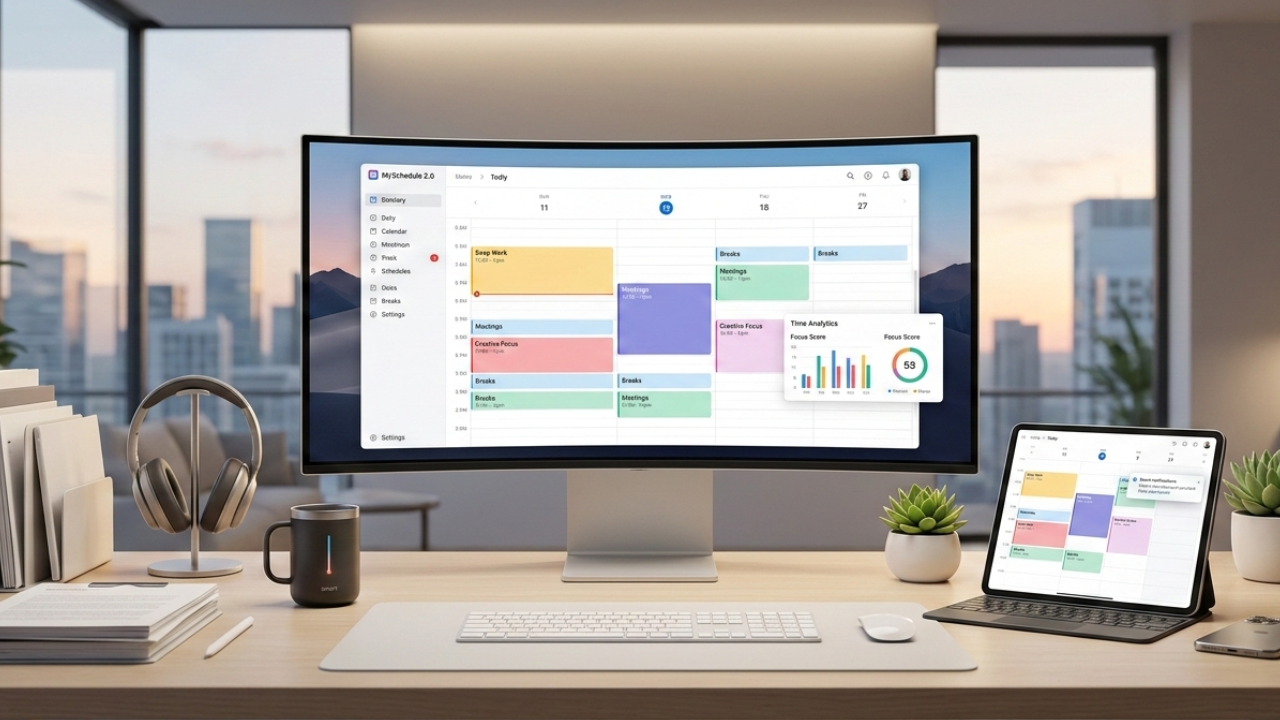
In an era where digital distractions are just a click away, staying productive has evolved from a simple habit into a competitive necessity. Whether you are a solopreneur, a student juggling multiple courses, or a project manager overseeing a global team, the tools you use to manage your hours can make or break your success. Enter MySchedule 2.0, the next-generation productivity suite designed to revolutionize how we perceive and utilize time.
This isn’t just another calendar app or a basic to-do list. MySchedule 2.0 represents a fundamental shift in time management philosophy, moving away from static planning toward dynamic, intelligent scheduling. In this comprehensive guide, we will explore why this version is a game-changer and how you can leverage its features to reclaim your day.
What is MySchedule 2.0?
At its core, MySchedule 2.0 is an integrated productivity ecosystem. While the original version focused on basic scheduling, the 2.0 iteration introduces advanced artificial intelligence and deep integration capabilities. It acts as a digital personal assistant that doesn’t just record what you have to do but helps you figure out when and how to do it most effectively.
The developers behind the platform recognized a common pain point: “Schedule Overload.” Most people fill their calendars with back-to-back meetings without accounting for deep work, travel time, or mental recovery. MySchedule 2.0 addresses this by using predictive algorithms to suggest optimal time blocks based on your historical productivity patterns.
The Evolution of Time Management
To understand why MySchedule 2.0 is gaining so much traction, we have to look at the history of time management. We started with paper planners, moved to digital calendars like Google and Outlook, and then transitioned to specialized task managers. However, these tools remained siloed. Your tasks lived in one app, your meetings in another, and your “free time” was essentially the empty space left over.
MySchedule 2.0 merges these silos. It treats your time as a finite, precious resource. By centralizing your workflow, it eliminates the “toggle tax” the cognitive drain caused by switching between different apps. It’s not just about listing tasks; it’s about creating a cohesive flow for your life.
Key Features and Benefits of MySchedule 2.0
What sets this version apart from the competition? It comes down to a few “smart” features that prioritize the user’s mental bandwidth over simple data entry. Here are the primary pillars of the 2.0 experience:
- Intelligent Auto-Scheduling: The “Auto-Pilot” mode analyzes your task list and automatically slots items into open gaps based on priority and deadlines.
- Deep Work Protection: Automatically silences non-essential notifications during high-focus blocks to ensure maximum cognitive output.
- Biometric Integration: Connects with wearable tech to suggest breaks when your stress levels or heart rate indicate burnout.
- Multi-Platform Ecosystem: Seamlessly syncs across iOS, Android, macOS, and Windows with zero latency.
- Time Analytics: Provides detailed weekly reports showing exactly where your hours went, categorized by project or energy level.
- Collaborative Heatmaps: Allows teams to see collective “bandwidth” without compromising individual privacy.

MySchedule 2.0 vs. Traditional Scheduling Tools
To help you understand the upgrade, let’s look at how MySchedule 2.0 stacks up against the “old way” of doing things:
| Feature | Traditional Calendars | MySchedule 2.0 |
| Task Integration | Separate App/List | Fully Integrated in Timeline |
| Conflict Resolution | Manual Adjustment | AI-Driven Auto-Rescheduling |
| Focus Management | None (Manual DND) | Automatic “Deep Work” Shields |
| Analytics | Basic Event Count | In-depth Productivity Insights |
| Team Coordination | Back-and-forth Emails | Live Availability Heatmaps |
| Time Buffer | Requires Manual Entry | Automatic “Smart Buffers” |
How to Set Up MySchedule 2.0 for Maximum Efficiency
Getting started with a new tool can be daunting, but MySchedule 2.0 makes the onboarding process intuitive. To get the most out of the platform, follow these strategic steps:
First, audit your existing commitments. Import your calendars from other services. MySchedule 2.0 supports one-click imports from all major providers. Once your “fixed” events (like meetings and appointments) are in place, you can see the true landscape of your available time.
Second, define your “Core Hours.” These are the times when you are most productive. For some, it’s 5:00 AM; for others, it’s 10:00 PM. By telling the app when your brain is most active, the AI can better suggest when to tackle your most difficult projects.
Third, use the “Tagging” system. Don’t just label an entry as “Work.” Use tags like “Creative,” “Admin,” or “Health.” This allows the app to provide you with a weekly breakdown of where your time is actually going. You might be surprised to find you’re spending 40% of your time on admin tasks that could be delegated or automated.
The Science of Productivity Behind the Software
MySchedule 2.0 isn’t just built on code; it’s built on behavioral science. The app utilizes techniques like Time Blocking and the Pomodoro Technique to keep users engaged. Time blocking is the practice of planning out every moment of your day in advance. While it sounds rigid, it actually provides a sense of freedom. When you know exactly what you should be doing at 2:00 PM, you eliminate the “decision fatigue” that often leads to procrastination.
Furthermore, the app encourages “buffer zones.” Research shows that humans are notoriously bad at estimating how long a task will take a phenomenon known as the Planning Fallacy. MySchedule 2.0 automatically suggests 5-to-15-minute buffers between tasks to account for the unexpected, reducing the stress of a “running late” domino effect.
Why MySchedule 2.0 is Essential for Remote Workers
The shift to remote and hybrid work has blurred the lines between “home” and “office.” Without a physical commute to signal the start and end of the day, many workers find themselves “always on.”
MySchedule 2.0 helps re-establish these boundaries. The “Work-Life Balance” dashboard tracks your “Off-Clock” time just as diligently as your “On-Clock” time. If you start habitually working past your set end time, the app will gently nudge you to wrap up. It turns time management into a tool for wellness, not just output.
Security and Privacy in the Digital Age
When you entrust an app with your entire life’s schedule, security is paramount. MySchedule 2.0 employs end-to-end encryption for all synced data. Unlike some free calendar services that monetize user data for advertising, MySchedule 2.0 operates on a transparent subscription model, ensuring that your data stays yours. They are fully GDPR and CCPA compliant, providing peace of mind for professionals handling sensitive corporate information.
Conclusion: Taking Control of Your Future
Time is the only resource we cannot buy more of. Every hour spent in a state of disorganized chaos is an hour lost to your goals, your family, or your personal growth. MySchedule 2.0 is more than just a software update; it is an invitation to take control of your narrative.
By automating the mundane aspects of scheduling and providing data-driven insights into your habits, it frees you to focus on what truly matters: the work itself. Whether you are looking to scale your business or simply find an extra hour in the day to exercise, this tool provides the structure you need to make it happen.
The world isn’t getting any slower, and the demands on our attention are only increasing. Embracing a tool like MySchedule 2.0 isn’t just a smart move for your career, it’s an essential move for your mental clarity.
Also Read: Elizabeth Mary Wilhelmina Bentinck: The Life and Legacy of a British Noblewoman
[…] Also Read: MySchedule 2.0: Master Your Time the Ultimate Guide […]