
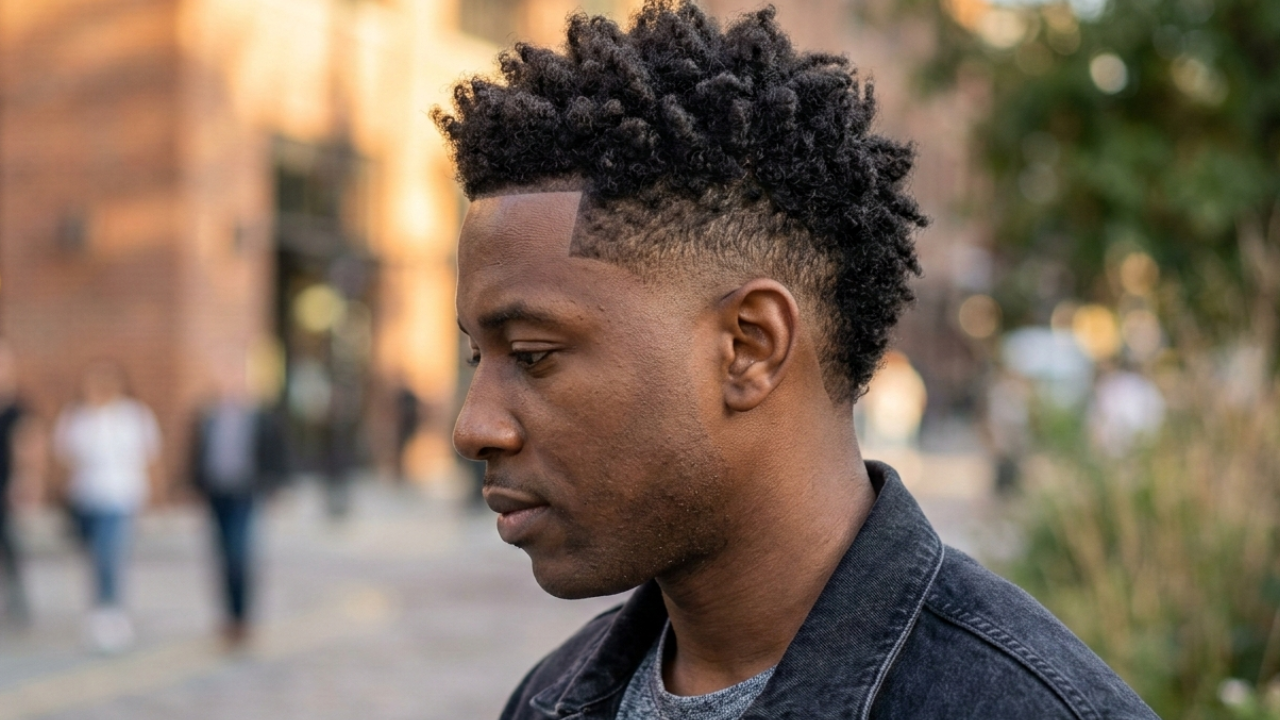
The burst fade has exploded in popularity over the last few years, evolving from a niche barbershop request to one of the most sought-after haircuts globally. Whether you are scrolling through Instagram, watching professional athletes, or just walking down the street, you’ve likely seen this dynamic taper in action.
But what exactly makes a burst fade different from a standard drop fade or a classic taper? And more importantly, is it the right look for your hair type and face shape? In this comprehensive guide, we are breaking down everything you need to know about the burst fade, from styling tips to maintenance, so you can walk into your next barber appointment with total confidence.
What is a Burst Fade?
At its core, the burst fade is a specific type of taper that curves around the ear, leaving the hair at the back of the neck longer. The “burst” effect comes from the way the hair radiates outward from the ear, creating a semi-circular faded area while maintaining the natural bulk of the hair at the crown and the nape.
Unlike a traditional mid fade or high fade that wraps around the entire circumference of the head in a straight or slightly dropped line, the burst fade is localized. It focuses on the area surrounding the ear, making it the perfect companion for hairstyles like the South of France, mohawks, mullets, and curly tops.
Why the Burst Fade is Trending in 2026
The reason this cut remains a top-tier choice is its versatility. It bridges the gap between a clean, professional look and an edgy, rebellious aesthetic.
- Customization: You can choose between a low, mid, or high burst depending on how much skin you want to show.
- Texture Compatibility: It works exceptionally well with straight, wavy, curly, and coily hair.
- Unique Silhouette: It provides a distinct profile view that sets it apart from standard “cookie-cutter” fades.
Choosing the Right Burst Fade for Your Hair Type
Not all fades are created equal. The way a burst fade looks on someone with 4C curls will be vastly different from how it looks on someone with pin-straight hair. Here is how to navigate your options:
The Burst Fade Mohawk (The Classic)
This is perhaps the most iconic version of the cut. By fading the sides around the ears and keeping a wide strip of hair running from the forehead to the nape, you create a modern mohawk that is stylish without being overly aggressive. It’s a favorite among soccer players and R&B artists.
Burst Fade with Curls and Coils
If you have natural texture, the burst fade is your best friend. It removes the bulk from the sides preventing the “mushroom” look, while allowing your curls to take center stage on top. This is often paired with a “line-up” or “shape-up” at the temples for a razor-sharp finish.
Straight Hair Burst Fade
For those with straight hair, the burst fade requires a bit more blending. Barbers often use a mix of shears and clippers to ensure the transition from the skin to the longer hair on top is seamless. This look often pairs well with a textured fringe or a messy quiff.
Burst Fade vs. Drop Fade: The Key Differences
Many people confuse the burst fade with the drop fade. While they share some DNA, the difference lies in the back of the head.
- The Drop Fade: The fade “drops” behind the ear and continues all the way around the back of the head, resulting in a low neckline.
- The Burst Fade: The fade stays concentrated around the ear. The hair at the back of the neck is left at its original length (or tapered slightly), allowing for a mullet-style or mohawk-style silhouette.
How to Ask Your Barber for a Burst Fade
Communication is the most important part of any haircut. To ensure you get the exact look you want, follow these tips when talking to your stylist:
- Specify the Height: Do you want a “Low Burst” (just a small radius around the ear) or a “High Burst” (reaching further up toward the temple and crown)?
- Define the Back: Do you want the back of your hair to be a “V-shape,” a rounded finish, or a full-on mullet?
- The Guard Size: If you want skin to show, ask for a #0 or a “skin fade.” If you prefer a shadow, ask for a #1 or #2 guard on the sides.
- Bring a Photo: This is non-negotiable. A picture of a burst fade you like is worth a thousand words of explanation.
Styling Tips for a Fresh Burst Fade
Once you leave the barbershop, the responsibility of keeping that cut looking “fresh” falls on you.
For Volume on Top: Use a sea salt spray or a lightweight volumizing mousse on damp hair. Blow-dry while lifting the hair at the roots to create height, which complements the faded sides.
For Definition: If you have curls, use a curl-defining cream or a twist sponge to enhance your natural pattern. The contrast between the tight fade and the defined curls is what makes this look pop.
For a Matte Finish: Use a matte clay or pomade. This provides a strong hold without the greasy shine, keeping the focus on the technical precision of the fade itself.
Maintenance and Upkeep
The downside of any high-contrast fade is that it grows out relatively quickly. Because the hair around the ears is cut so short, even a week of growth can start to “fuzz” the clean lines.
- Frequency: To keep a burst fade looking sharp, you should plan on visiting your barber every 2 to 3 weeks.
- The In-Between: If you are comfortable with a trimmer, you can carefully “clean up” your sideburns and the hair directly around your ear at home, but be careful not to touch the blended transition area.
- Skincare: Since a burst fade exposes more skin around the ears and temples, keep those areas moisturized to avoid dry skin or irritation, especially if your barber used a straight razor.
Face Shape Considerations
Does a burst fade suit everyone? Generally, yes, but small adjustments can make it even better:
- Round Faces: Opt for a higher burst fade with more volume on top. This elongates the face and adds much-needed angles.
- Oval Faces: You are in luck; almost any variation of the burst fade will work for you.
- Square Faces: A mid-burst fade helps soften the corners of the jawline while maintaining a masculine silhouette.
- Long/Oblong Faces: Avoid too much height on top. A lower burst fade with a bit more width on the sides will prevent the face from looking excessively long.
Common Mistakes to Avoid
Before you commit to the cut, be aware of these common pitfalls:
- Fading Too High: If the burst goes too far back, it turns into a standard high fade, and you lose that “burst” shape.
- Ignoring the Nape: The magic of the burst fade is the hair left at the back. If your barber accidentally trims the back too short, you’ve lost the signature look.
- Lack of Blending: A “choppy” fade where you can see the lines between different guard lengths is a sign of a rush job. Ensure your barber is skilled in “tapering” and “fading” techniques.
Final Thoughts on the Burst Fade
The burst fade is more than just a trend; it is a versatile technique that allows for immense personal expression. It can be professional enough for the office yet edgy enough for the weekend. By focusing the “drama” of the haircut around the ears, it provides a frame for your face and highlights your hair’s natural texture on top.
Whether you’re looking to refresh your current style or want a total transformation, the burst fade offers a modern, clean, and stylish solution. Just remember: find a skilled barber, keep up with your trims, and don’t be afraid to experiment with the length on top.
Also Read: The Science of Clean: Why www shopnaclo com is Redefining Personal and Home Hygiene
[…] Also Read: The Ultimate Burst Fade Guide: The Sharpest Way to Level Up Your Hairstyle […]